
Parkinson’s disease: asleep DBS
You are under general anesthesia during lead placement. Imaging and recordings of brain-cell activity help guide placement; microelectrode recording does not require you to be awake.
Patient information · Baylor Medicine
Deep brain stimulation (DBS) is an interventional treatment for Parkinson’s disease, essential tremor, dystonia, obsessive compulsive disorder, and certain forms of epilepsy.
This guide explains the treatment, who may benefit, the evaluation process, and the care available at Baylor. DBS can reduce symptoms, but it does not cure these conditions.
For an evaluation, call 713-798-4696.
Monday–Friday, 8 a.m.–5 p.m.
AI-assisted patient education
Ask a question in your own words. This assistant is being developed to help patients and families understand the information in this guide.
For advice about your own care, please speak with your clinical team.
Contact the neurosurgery clinicEvery answer shown here has been approved by our clinicians.
What would you like to understand about deep brain stimulation?
You could ask
01 / Understanding DBS
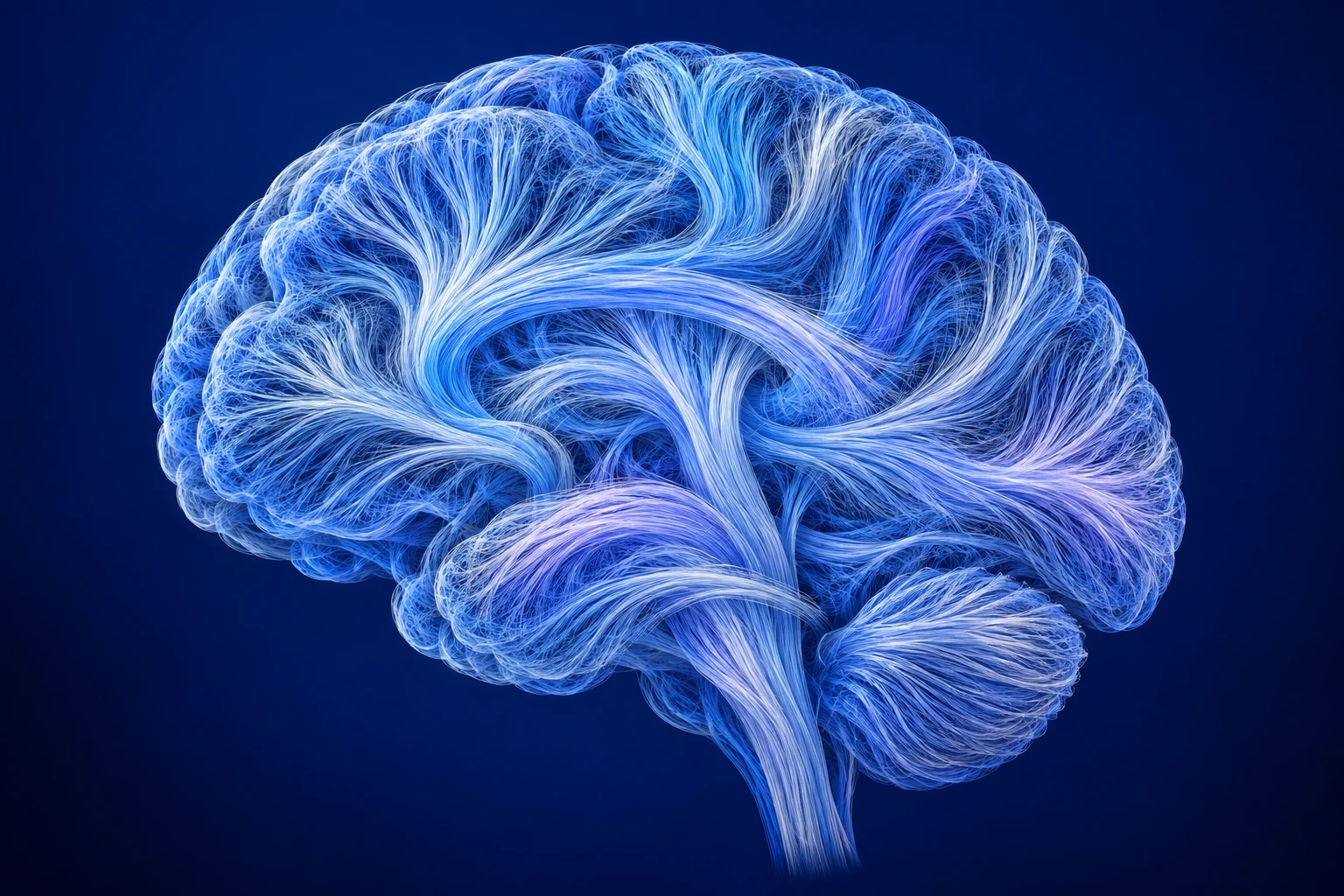
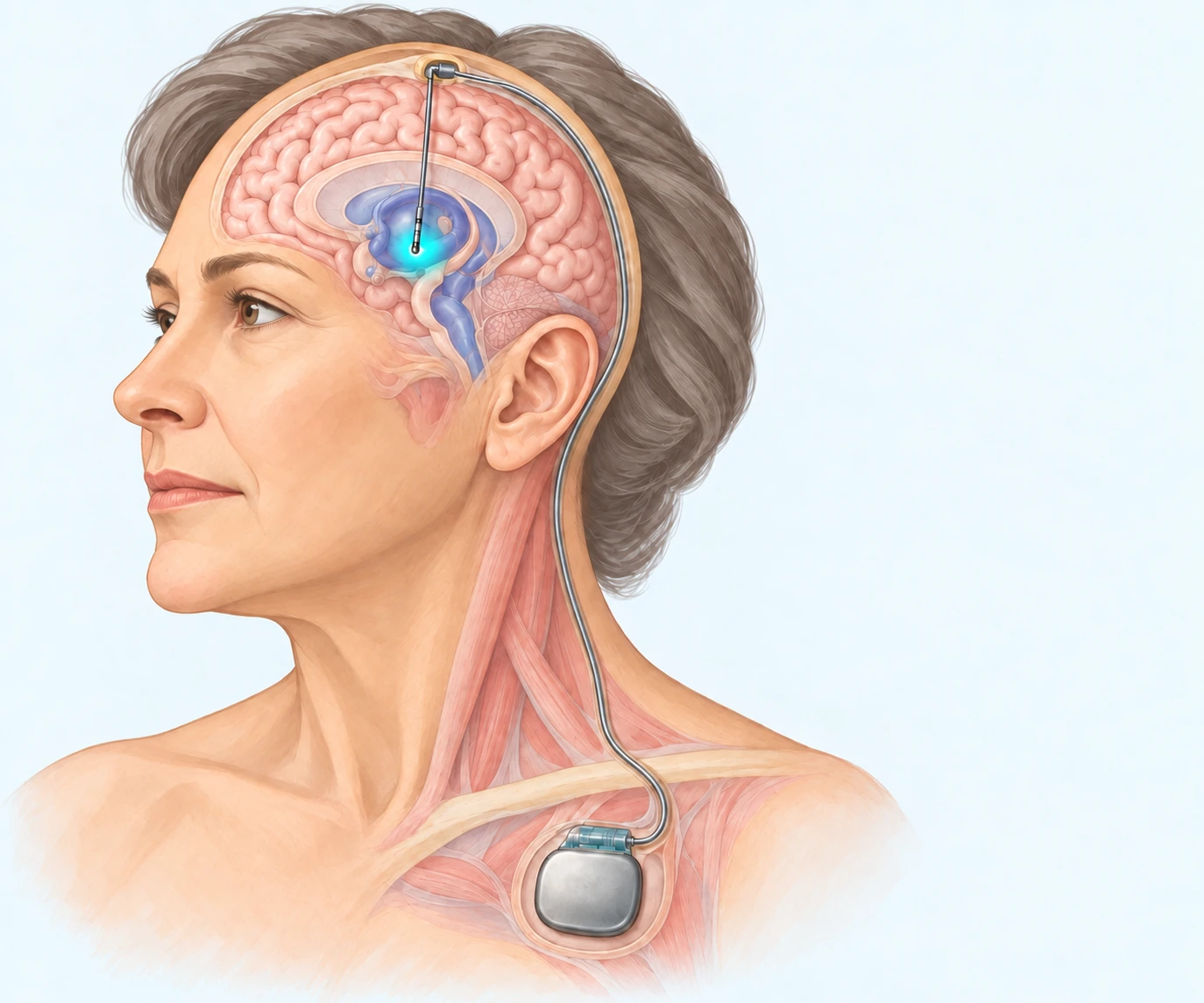
Deep brain stimulation works in a way similar to a pacemaker for the heart. A thin electrode is placed in a precisely chosen area deep in the brain, where movement or mood circuits have become overactive or disorganized. A small battery-powered device under the skin of the chest delivers gentle electrical pulses that quiet the abnormal signaling.
Unlike procedures that permanently remove or lesion tissue, stimulation is adjustable and reversible. Your care team tunes the settings to your symptoms over time, and the system can be turned off or removed. More than 250,000 people worldwide live with a DBS system today.
Our neurosurgeons also study how brain activity differs between patients. This research examines how stimulation can be adjusted to individual symptoms.
02 / Conditions we treat
DBS is used for Parkinson’s disease, essential tremor, dystonia, severe obsessive compulsive disorder, and certain forms of epilepsy. Each condition has its own brain target, evidence base, and eligibility criteria.
For people whose medications still work but no longer last, DBS can extend your best "on" time through most of the day and smooth out fluctuations and dyskinesia. Most patients also reduce their medication doses.
When tremor keeps you from writing, eating, or working despite medication, thalamic DBS improves tremor substantially in the large majority of well-selected patients. Incisionless focused ultrasound is an alternative for some.
DBS is an established therapy for generalized, segmental, and cervical dystonia that has not responded to medications and botulinum toxin. Benefit often builds gradually over months.
Working with the Menninger Department of Psychiatry, we were the first center in the South Central U.S. to offer DBS for severe, treatment-resistant OCD, an FDA-approved use under a humanitarian device exemption.
DBS of the anterior nucleus of the thalamus is FDA-approved as an additional treatment to reduce seizure frequency in adults 18 and older with focal-onset seizures that have not responded to three or more antiseizure medications. An epilepsy specialist evaluates whether this approach is appropriate. FDA approval information.
The program evaluates patients whose DBS was implanted elsewhere for second opinions, reprogramming, troubleshooting, battery replacement, and revision surgery. Call 713-798-4696 and ask for a DBS second opinion.
03 / Candidacy
DBS is not a last resort, and it is not appropriate for everyone. It is usually considered when medications still help but no longer last through the day. Two principles guide candidacy:
1. Your best "on" is the ceiling. For Parkinson's disease, the symptoms that improve when your levodopa is working at its best are the symptoms most likely to improve with DBS. Think of DBS as making your best hours last most of the day. When medications have stopped working completely, DBS will not work either.
2. DBS treats symptoms, not the disease. It does not slow or stop the underlying condition, and it will not relieve every symptom.
An evaluation does not commit you to surgery. Many evaluations conclude that DBS is not the right option at this time, and that is a useful result.
04 / What to expect
From first visit to optimized stimulation typically takes several months. The steps are the same for every patient.
You or your physician calls 713-798-4696, or your neurologist sends records. You will be seen by a fellowship-trained movement disorders neurologist or functional neurosurgeon, who reviews your history, confirms the diagnosis, and makes sure medical therapy has been optimized first.
A structured workup: a motor exam on and off medication when relevant, detailed neuropsychological testing of memory and thinking, brain MRI, and psychiatric evaluation when appropriate. Each component either confirms that DBS is likely to help or identifies a reason it is not.
Neurosurgery, neurology, neuropsychology, and psychiatry review your evaluation together and reach a consensus: proceed with DBS, optimize something first, or recommend an alternative such as focused ultrasound or continued medical therapy. We call you with the recommendation and the reasoning behind it.
The electrode is placed through a small opening in the skull using image guidance. For Parkinson’s disease, our usual approach is general anesthesia with microelectrode recording. For essential tremor, awake testing lets us assess tremor control and side effects during placement. Placement is verified before you leave the operating room. Most patients stay one night.
A short outpatient procedure under general anesthesia connects the lead to the pacemaker-like generator below your collarbone. You go home the same day.
A few weeks after surgery, once healing settles, stimulation is switched on. Finding your best settings takes several visits over three to six months, and benefit can continue to build for up to a year. Medications are adjusted alongside. Ongoing programming and follow-up can be provided by your referring neurologist, our team, or both, according to the agreed care plan.
05 / Surgical options
For Parkinson’s disease, asleep DBS is our usual approach: patients are under general anesthesia, and we use microelectrode recording to help identify the target. For essential tremor, we generally use awake DBS so we can assess tremor control and side effects during surgery. The plan is individualized with your surgeon.
You are under general anesthesia during lead placement. Imaging and recordings of brain-cell activity help guide placement; microelectrode recording does not require you to be awake.
You participate in testing during lead placement so the team can assess tremor improvement and stimulation-related effects. The anesthesia team helps keep you comfortable throughout the procedure.
We use ROSA robotic assistance to align instruments with the planned path to the brain target. The aim is to reduce variability in positioning and make placement more consistent. Your surgeon plans and controls the procedure and verifies the final lead position.
About ROSA robotic assistance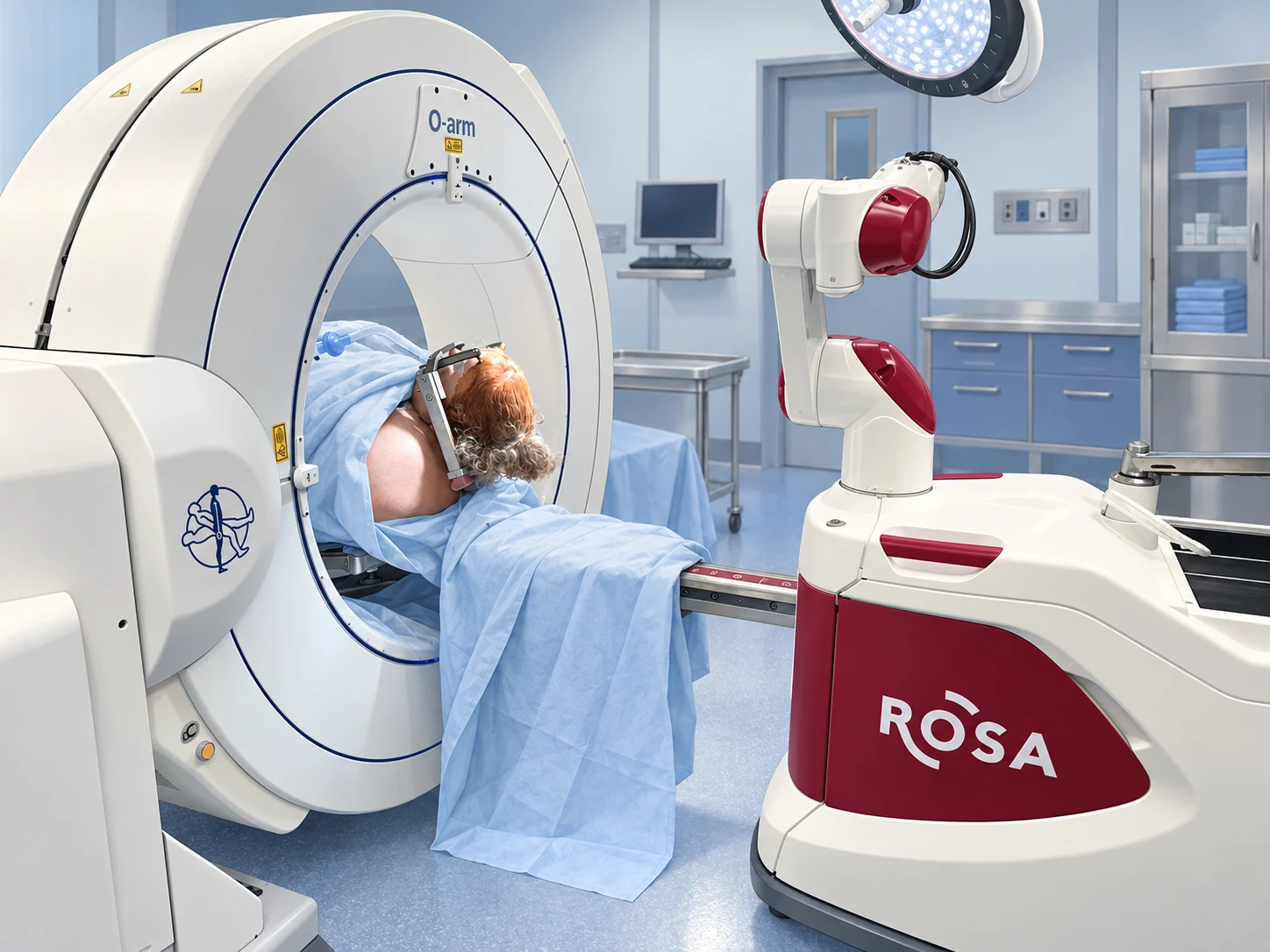
Another treatment option
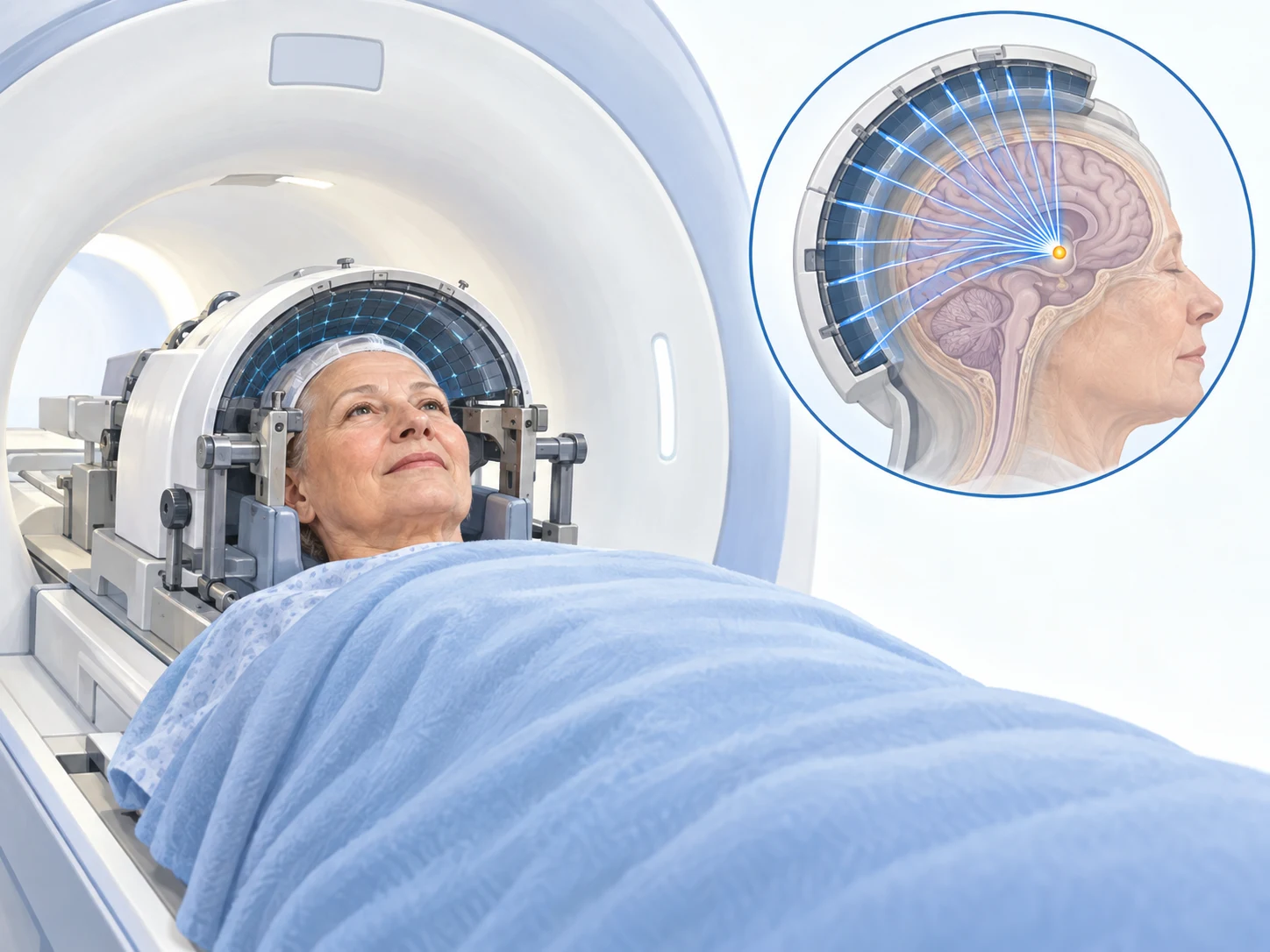
For selected patients with essential tremor or tremor-dominant Parkinson’s disease, we also offer focused ultrasound. Ultrasound energy converges on a small brain target while MRI guides treatment and monitors temperature.
It requires no incision or implanted device. It creates a small permanent lesion, so its effects cannot be adjusted or reversed in the way DBS stimulation can. Your team can discuss which approach fits your symptoms and goals.
Focused ultrasound at Baylor MedicineWhen stimulation is not the right tool. For selected patients we also offer stereotactic lesioning procedures (thalamotomy, pallidotomy, capsulotomy), stereotactic radiosurgery, and laser interstitial thermal therapy.
Choosing a system
Device selection is a shared decision with your care team. We consider your diagnosis, treatment goals, day-to-day needs, and the options available for your condition.
Would regular recharging fit your routine? How easy is the controller for you or a care partner to use?
Which stimulation, sensing, or adaptive features are appropriate for your condition? How will your team manage follow-up visits?
What scans are permitted with the exact system? What are the expected battery service life and replacement needs?
Features, approved uses, and MRI conditions vary by model. The team will review the specific system being considered.
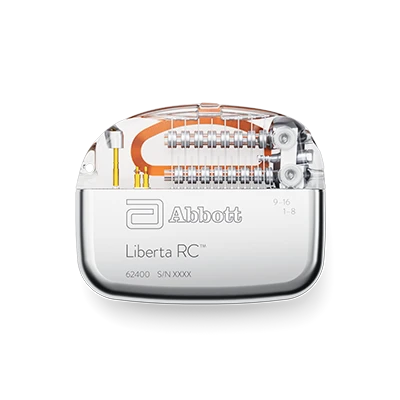
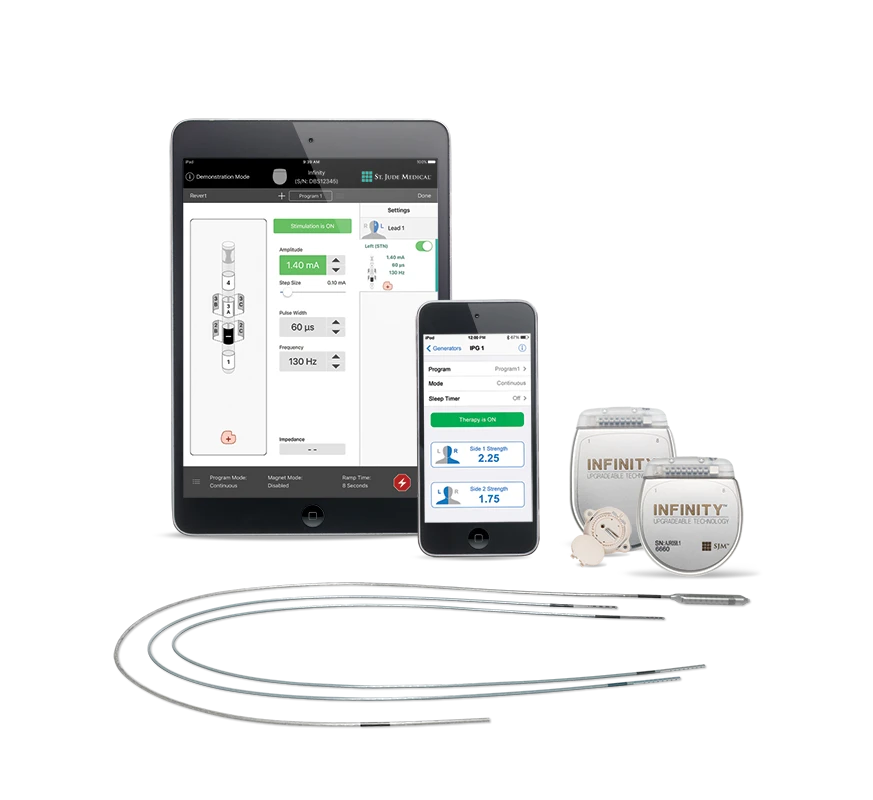
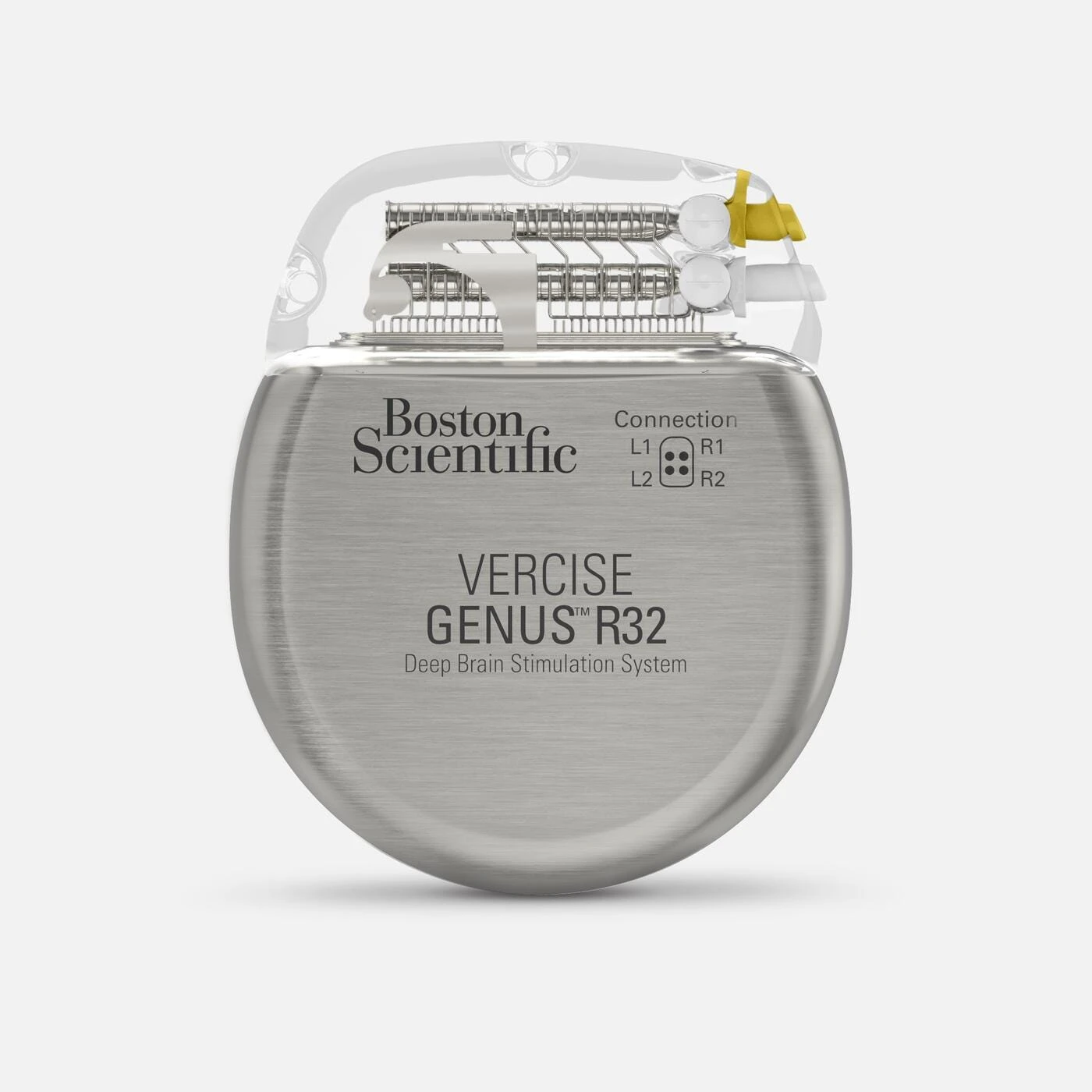
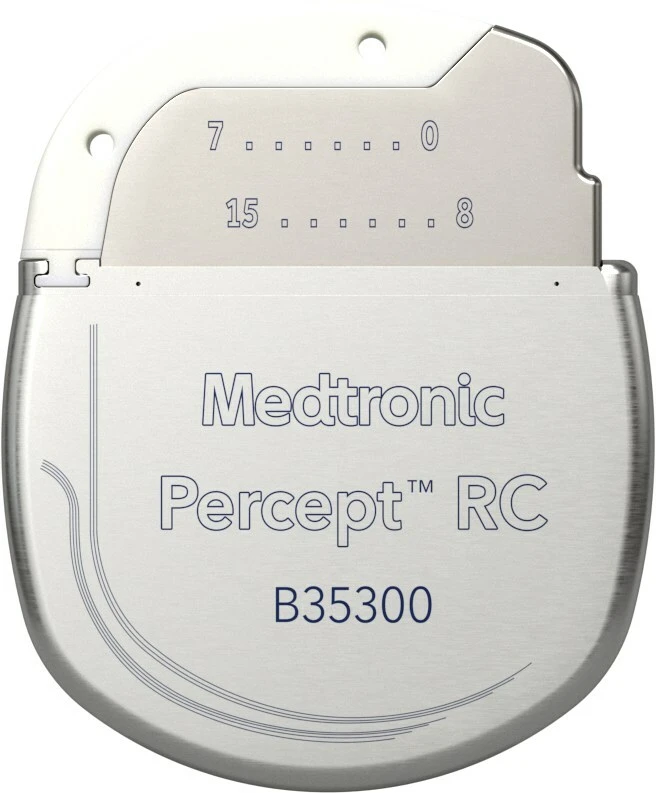

Manufacturers are listed alphabetically. Images show examples, are not to scale, and do not show every available model. Your care team will help compare the systems appropriate for you.
06 / Safety
DBS is brain surgery. Its risks fall into three categories, which differ in seriousness and in how readily they can be corrected.
<1%
The most serious risk is bleeding in the brain, which can include stroke. The risk of a bleed that causes symptoms is well under 1 percent. Infection occurs in about 1 in 50 patients; if it occurs, we sometimes need to remove the hardware, and the system can often be re-implanted after the infection clears. Serious complications that could be life-threatening are rare, about 1 in 300 to 1 in 500 patients. We review your individual risks with you before any decision.
Adjustable
Tingling, speech changes, or balance changes can occur when stimulation is on. These are usually improved or eliminated by adjusting the settings, which is the core advantage of stimulation over a permanent lesion.
MR Conditional
MRI eligibility depends on the exact implanted system and scan conditions. Before an MRI, the DBS and radiology teams must confirm the components, device settings, and manufacturer’s scanning requirements. Bring your device identification card.
Device complications, including lead movement or breakage, may require another procedure. Battery monitoring and replacement planning are part of ongoing care.
DBS does not make patients symptom-free, and the underlying condition continues on its own course. For well-selected patients, it reliably reduces symptoms for years. The purpose of the evaluation is to determine, before surgery, whether that benefit is likely for you.
07 / Clinical team
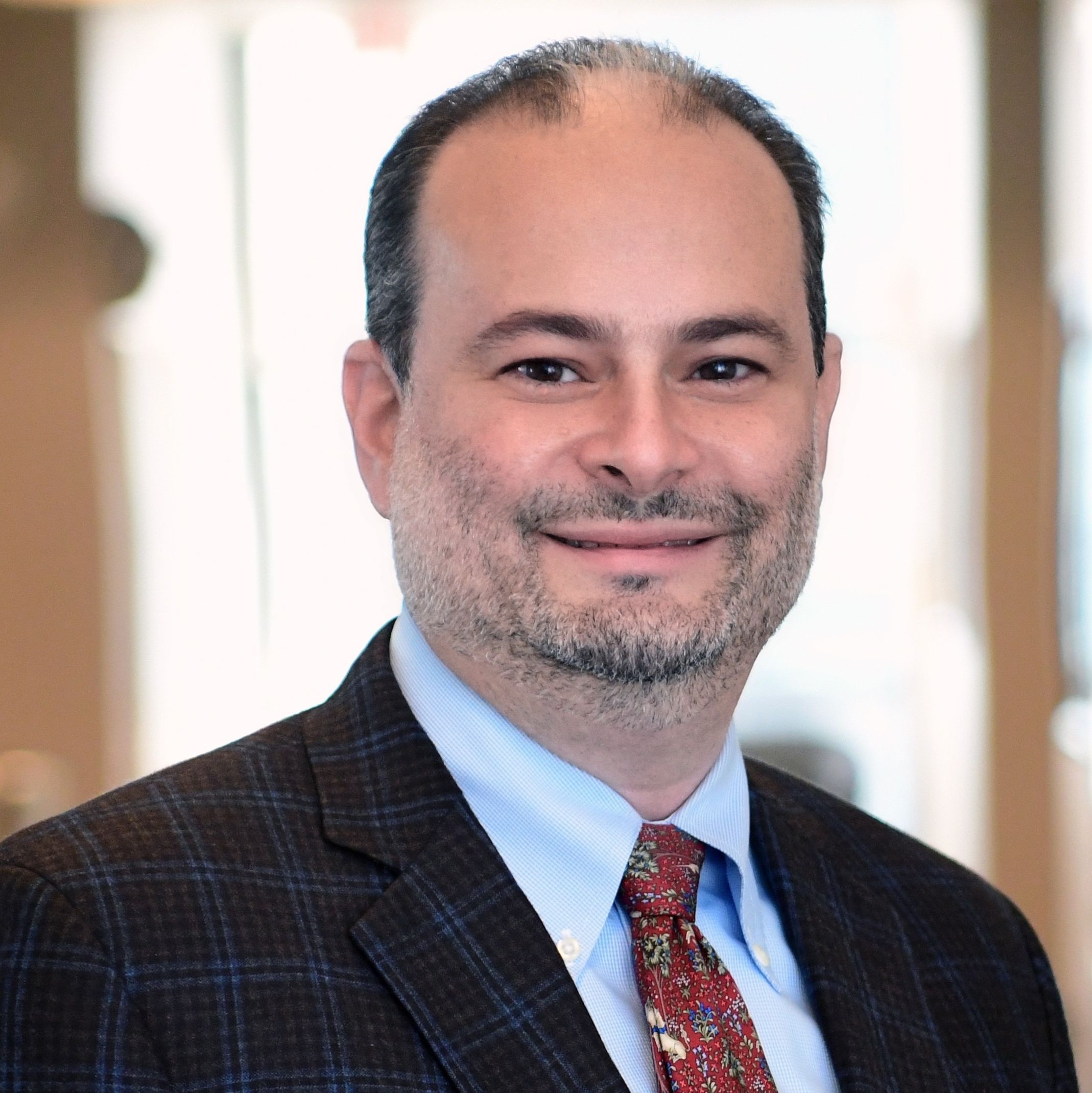
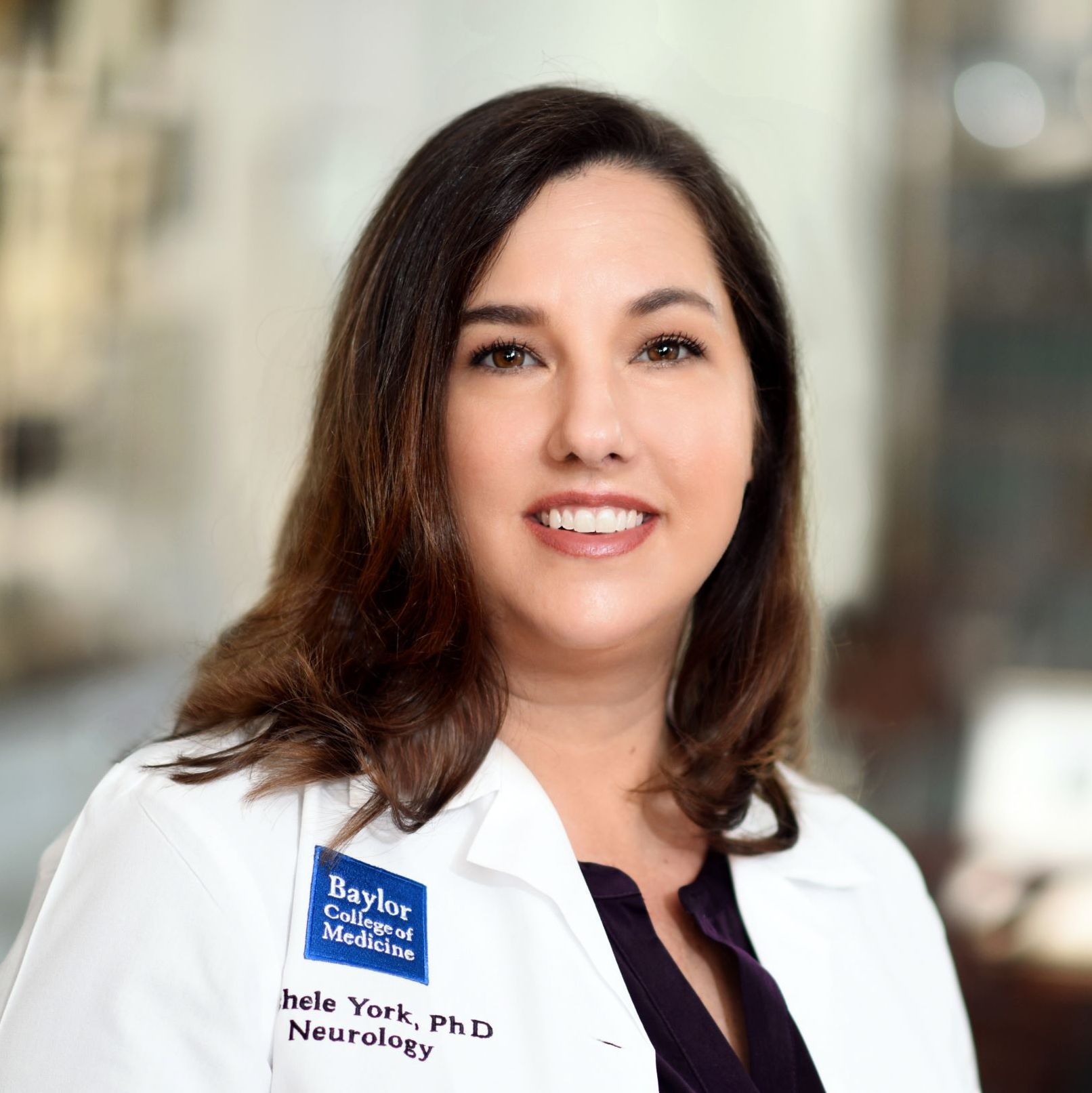
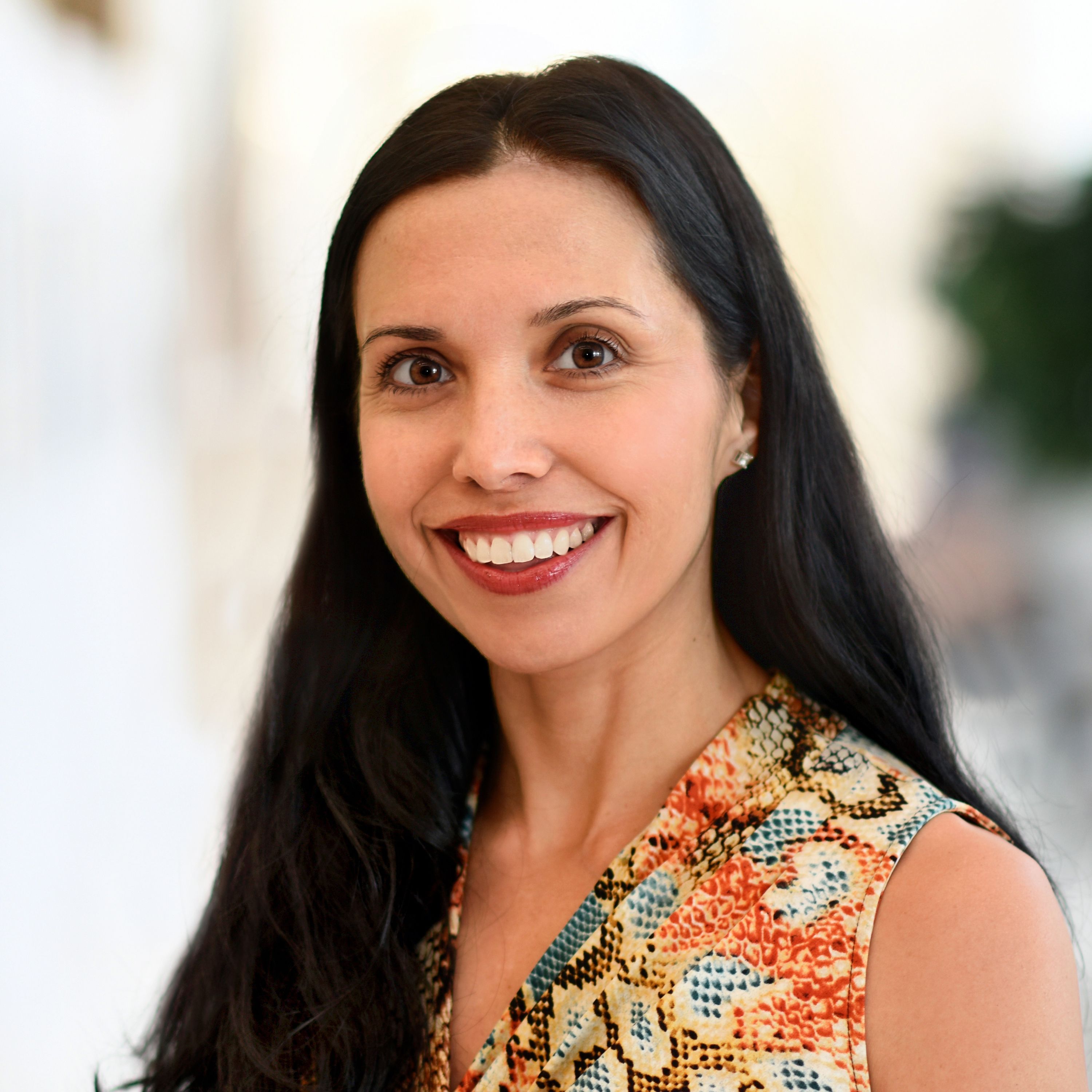
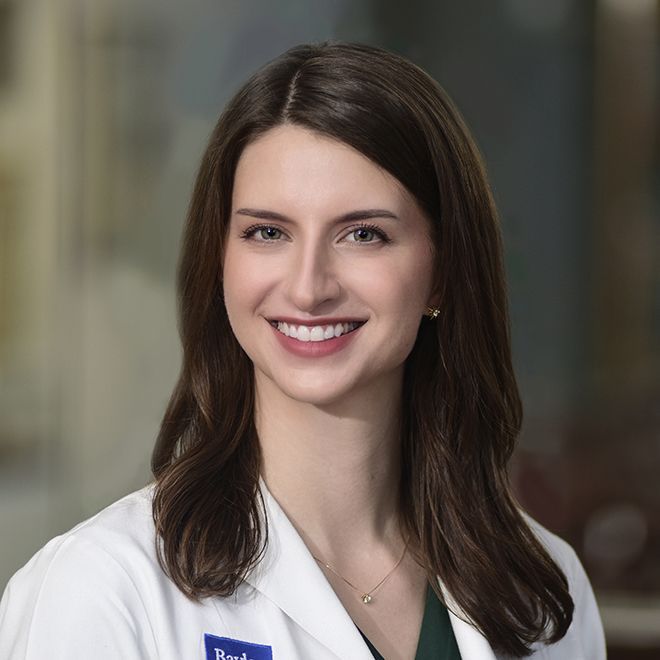
Your care brings together neurosurgery, neurology, neuropsychology, and psychiatry as needed, in coordination with your referring clinician.
You can be referred by a neurologist at Baylor or another practice. We can coordinate surgery while your neurologist continues your care, or our neurologists can help with evaluation and initial programming before you return. Together, we will agree on the arrangement that works best for you.
Referral and shared-care information


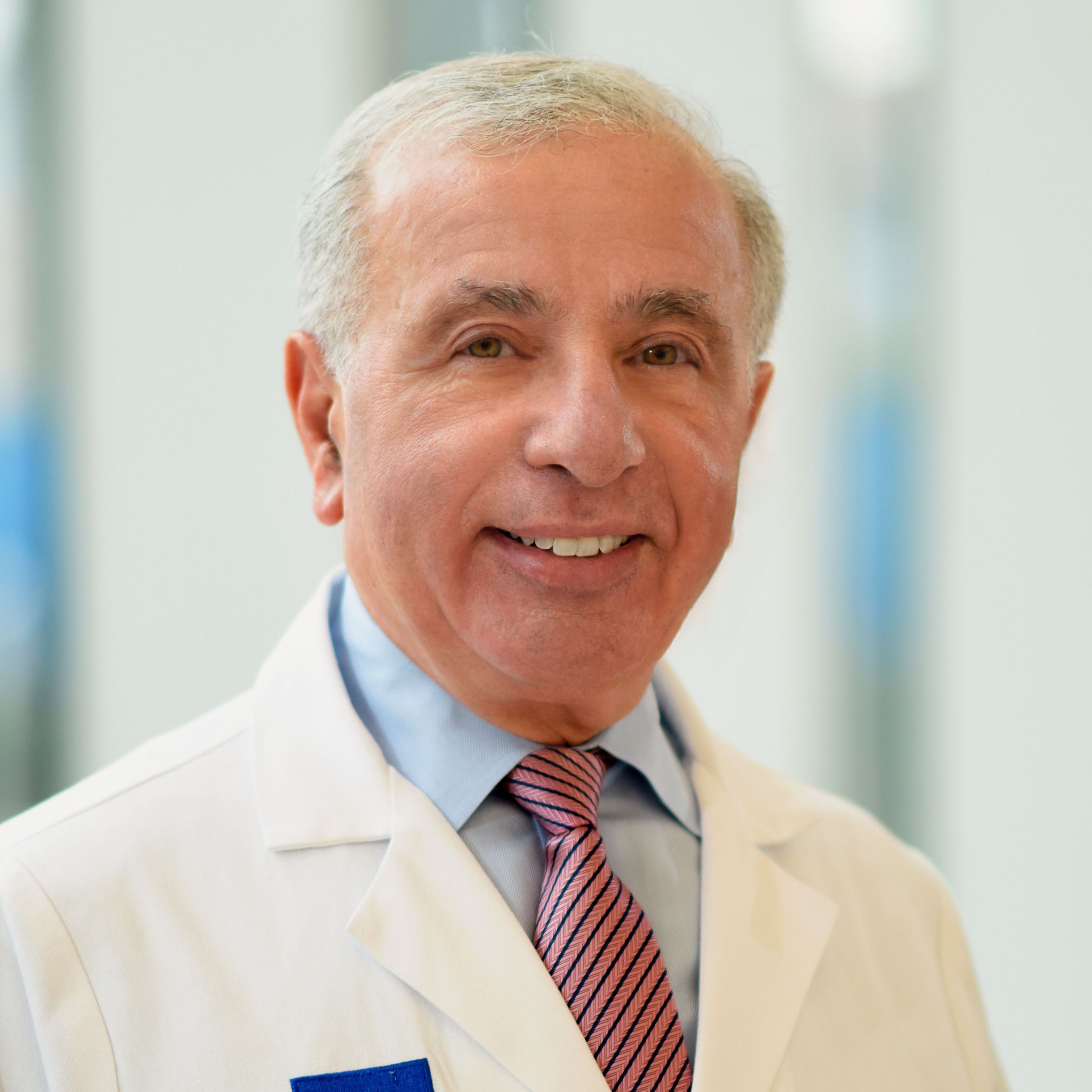

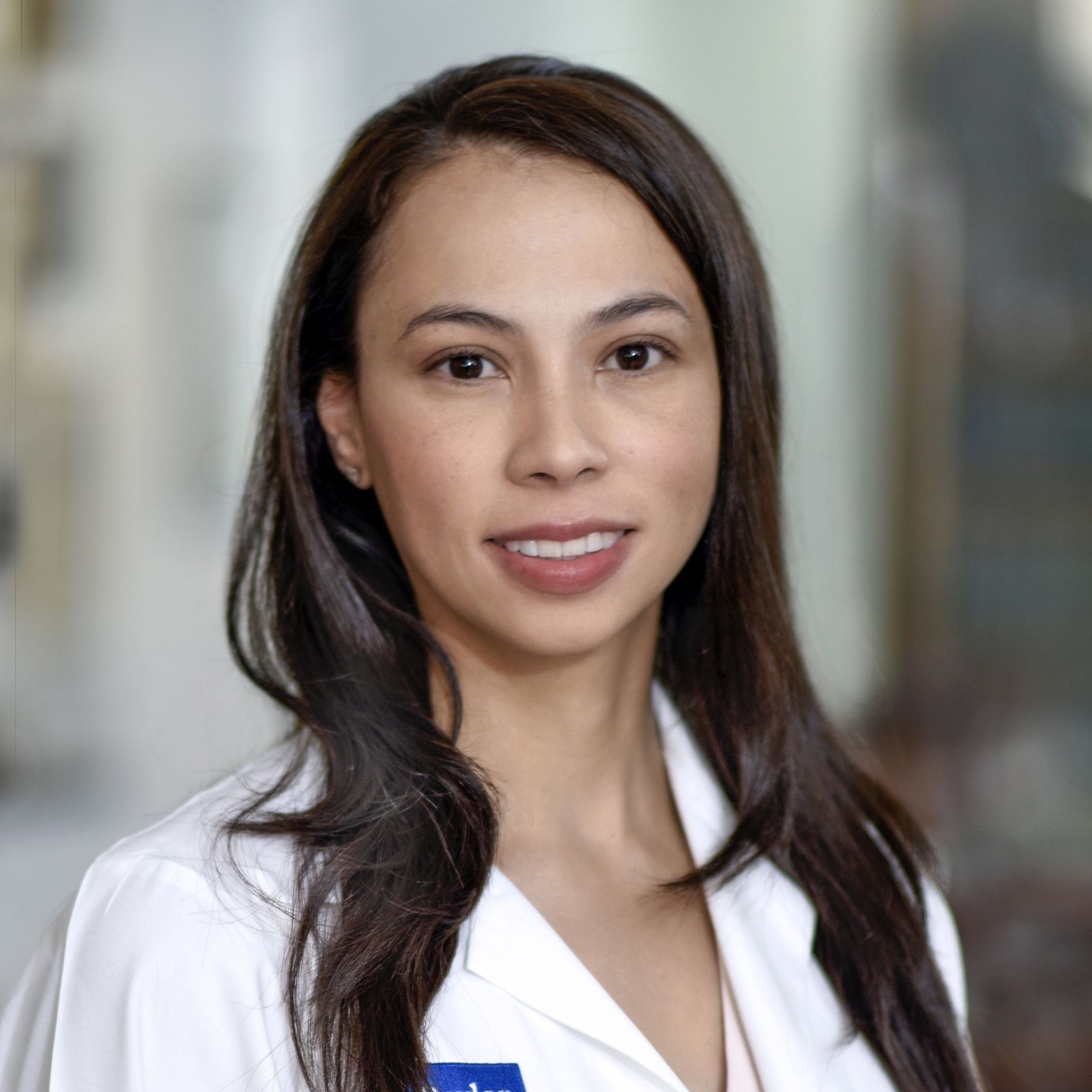
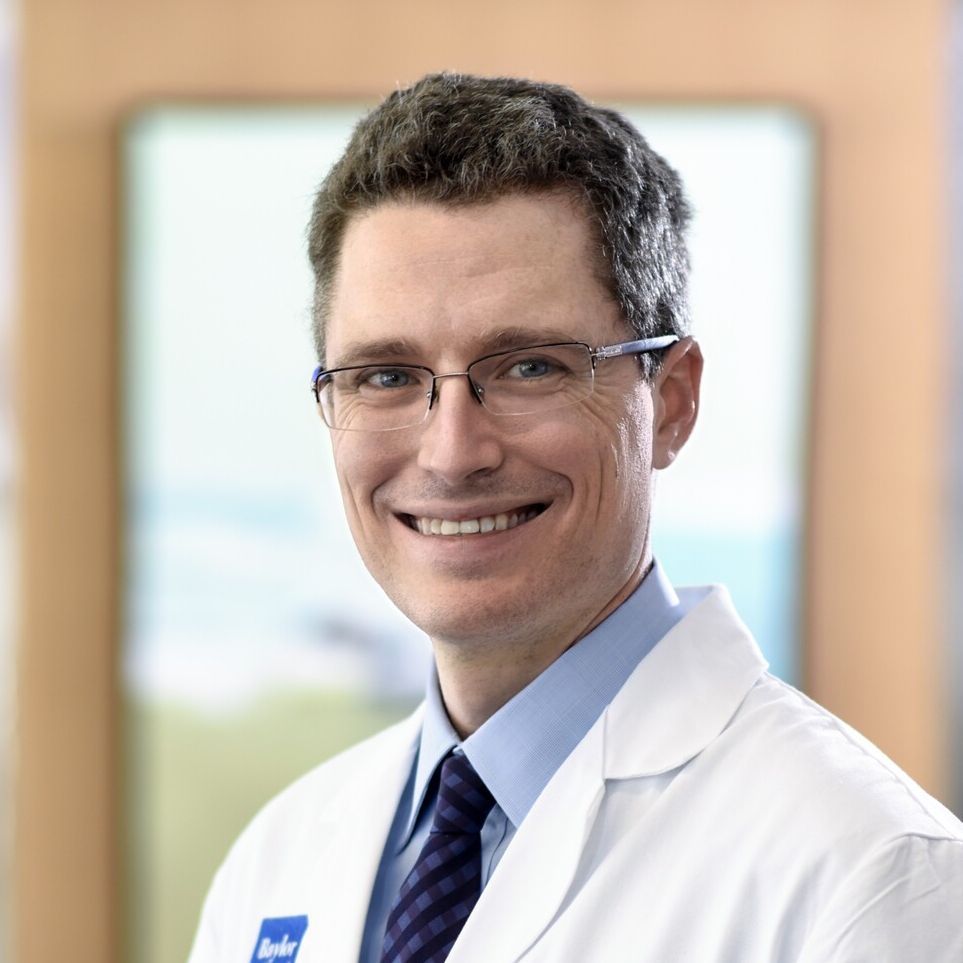
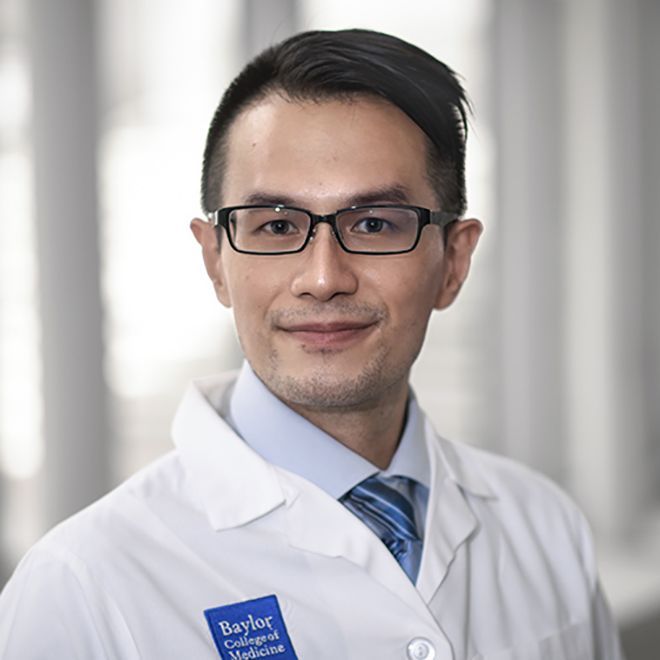


Program experience
08 / Research
Baylor’s neurology and neurosurgery teams study movement disorders and ways to improve treatment. Research participation is optional and separate from the decision to receive clinical care.
NIH-funded research · R01 NS124650
This project studies how electrical activity in two DBS targets—the subthalamic nucleus and globus pallidus—relates to different movement symptoms. The goal is to identify signals that could help tailor future DBS treatment to each person.
Principal investigators: Nuri Firat Ince, PhD, and Ashwin Viswanathan, MD.
Project details at NIHInvestigational treatment · NCT06423430
TRANSCEND is studying whether stimulation of a brain circuit involved in mood can help adults with depression that has not improved with multiple treatments. DBS for depression is investigational and is not an FDA-approved treatment.
The Baylor–St. Luke’s site is listed as recruiting. For study information, contact Autumn Hildebrand.
Study details and eligibilitySelected studies from the Parkinson’s Disease Center and Movement Disorders Clinic include registries, genetic research, and studies of symptoms over time. Observational studies do not assign an experimental treatment.
Parkinson’s disease · Observational
Following people with and without Parkinson’s to identify markers of how the disease develops and changes. The Baylor site is listed as recruiting; eligibility depends on the study group.
Study details and contactsParkinson’s disease · DBS registry
A multicenter registry following people receiving DBS for Parkinson’s disease to understand outcomes, side effects, and differences in care. Listed in Baylor’s study directory; contact the study team about enrollment.
Baylor study detailsParkinson’s disease · Observational
Studying genetic and other factors associated with Parkinson’s risk and progression through clinical assessments, questionnaires, and blood samples. Listed in Baylor’s study directory; contact the study team about enrollment.
Baylor study detailsEssential tremor · Genetics
Studying families with essential tremor to look for associated genes and genetic changes. Participation involves a family interview and clinical evaluation. Listed in Baylor’s study directory; contact the study team about enrollment.
Baylor study detailsEssential tremor · Biomarkers
Examining a protein called alpha-synuclein in skin nerve fibers in people with essential tremor, including those with additional symptoms that may relate to Parkinson’s disease. Listed in Baylor’s study directory; contact the study team about enrollment.
Baylor study detailsMovement disorders · Genetics
Collecting clinical information and genetic samples to support future research into Parkinson’s disease, essential tremor, and other neurological disorders. Listed in Baylor’s study directory; contact the study team about enrollment.
Baylor study detailsStudy information checked September 25, 2026. Recruiting status comes from ClinicalTrials.gov; directory listings alone do not confirm that enrollment is open. The study team can confirm current availability and eligibility.
09 / Common questions
DBS is usually considered for people with Parkinson's whose levodopa still works, but who have “on/off” swings that are getting more frequent, troublesome extra movements (dyskinesia), or tremor that medicine does not control. There is a “window of opportunity”: after mild symptoms, but before the disease is late-stage. You do not have to wait until your Parkinson's is advanced; earlier surgery may help your quality of life. DBS is usually not a good choice for people with dementia, for people whose health makes surgery unsafe, or for people whose Parkinson's disease has reached a late stage. A team of experts decides, based on testing.
DBS is not a cure for Parkinson's disease, and it does not slow or prevent progression; it treats symptoms, and many people still need medication after DBS. In a randomized study, people who had DBS had a substantial improvement in quality of life in virtually every area measured. For Parkinson's disease, a study with 10 years of follow-up found that stimulation still improved tremor, slowness, and overall movement. For essential tremor, the benefit lasts more than 10 years in many people.
DBS helps the movement symptoms of Parkinson's disease, including stiffness (rigidity), slowness (bradykinesia), and tremor, and it has been shown to increase the amount of good “on” time you have each day. Freezing and falling usually will not improve, and speech difficulty and swallowing problems are also unlikely to improve. Everyone's symptoms are unique, and your movement disorders neurologist is the best person to counsel you on which symptoms you can expect to improve after surgery.
DBS is safe and for the right patient, the benefits far outweigh the risk. But, like any procedure it carries risks. The main risks are infection and bleeding, and less often swelling around the leads, a seizure, or confusion after surgery. Infection occurs in about 1 in 50 patients, and the risk of a bleed that causes symptoms is well under 1%. Serious complications that could be life-threatening are rare, occurring in about 1 in 300 to 1 in 500 patients. Stimulation side effects such as tingling, speech changes, or balance problems can usually be minimized by device programming. Hardware problems are not common. Your care team can tell you how this applies to you.
Surgery can be done either awake or asleep. For essential tremor, it is often helpful for you to be awake for a portion of the surgery so that we are able to test you to make sure the leads are in the best therapeutic spot. For Parkinson’s disease, asleep surgery is equally effective and safe, and microelectrode recording can be used as additional confirmation of lead position.
DBS is usually done in two stages. The first stage places the brain leads and takes about 3–4 hours, and most people stay one night in the hospital. The second stage, usually 1–2 weeks later, places the battery under the collarbone and connects the wires; it takes about 1 hour under general anesthesia and is outpatient. Recovery takes a few days to a couple of weeks. Light activities are usually fine right away, and work, exercise, and full activities usually resume within a few weeks.
Most people with Parkinson's still take some medicine after DBS, but many can take less. STN DBS may allow a larger reduction in your levodopa dose. Medicine and stimulation are adjusted together, slowly, by your care team.
The device is usually turned on about 4 weeks after the lead implantation. Programming means adjusting the device settings with a tablet or computer that talks wirelessly to your stimulator: the team chooses which contacts to use and sets how strong, how fast, and how long the pulses are, then checks your symptoms and side effects. While you may experience some benefit after the first programming session, finding the best settings takes a few months. Programming visits are usually about once a month for the first 6 months, at which point the stimulator is usually optimized.
Focused ultrasound makes a small, permanent lesion in a precise part of the brain. It needs no incision or implanted device, but it requires a fully shaved head and cannot be adjusted later. Focused ultrasound cannot be performed on both sides at one time, though focused ultrasound on the second side can be performed nine months after the first side. DBS places a lead that can be adjusted and turned off, and leads can be placed on both sides of the brain at the same time. The choice of deep brain stimulation versus focused ultrasound for Parkinson’s disease and essential tremor is extremely individualized. We encourage you to speak with your movement disorders neurologist or neurosurgeon about the best option for you.
Most people who undergo deep brain stimulation will have undergone neuropsychological assessment prior to the intervention, which can help in determining if you may be at increased risk for memory or mood changes after surgery. For patients who have been evaluated by a movement disorders neurologist and by a neuropsychologist, the risk of changes to memory and thinking is low. The introduction of directional DBS leads, higher-quality MRIs before surgery, and intraoperative imaging have reduced the chance that DBS may affect your speech. Please discuss any concerns with your neurology and neurosurgery team so we may counsel you appropriately.
Many newer DBS systems allow MRI, including full-body MRI, but only under specific conditions for your exact device; always tell the MRI staff that you have DBS, and check with your DBS team before any MRI. Airport security and airline travel usually do not pose any concerns; the device manufacturer will provide you with a card that indicates you have an implanted device. Regular exercise is encouraged, but avoid contact sports or activities that could hit your head or chest or pull on the neck wires, unless your team says they are OK. Most household items, like microwaves, computers, and cell phones, are safe to use normally.
A non-rechargeable battery usually needs to be replaced every 3–5 years. A rechargeable battery lasts much longer, at least 12–15 years, but needs regular charging, about an hour once a week. At each visit with your neurology team the battery is checked, and a warning appears as a battery moves toward the end of its life, so it is our goal for your battery never to run out unexpectedly. Battery replacement is a short outpatient surgery; the brain leads are not touched.
For most patients whose symptoms are not controlled by medications, deep brain stimulation is covered by most insurance plans, including Medicare. There are certain tests and evaluations that need to be performed before surgery to assist with insurance authorization. While DBS is covered by many insurance plans, you may have to pay a deductible or copayment. Our office can help you understand the cost of DBS.
Tell your care team. Sometimes achieving the benefit we want for you simply requires adjustment of your deep brain stimulator or your medical management. Other times, investigation of the lead placement or the device parts is needed to determine if there is an issue that needs to be addressed surgically.
Patient services
Call 713-798-4696, Monday through Friday, 8 a.m. to 5 p.m. A referral is not required, and a completed workup is not needed before the first visit.
Contact the team
Have a question for our neurosurgery team? Write your message here.
For appointment inquiries only. For medical issues, please contact your physician directly.
Baylor Medicine, McNair Campus
7200 Cambridge Street, 9th Floor
Houston, TX 77030
Phone: 713-798-4696
Online: Request an appointment · MyChart
Baylor St. Luke's Medical Center
Texas Medical Center
Houston, TX
DBS procedures are performed at Baylor St. Luke's, where our surgeons lead the neurosurgery service. Patients traveling from out of town should mention it when calling; visits can often be consolidated.
Referral information
We accept referrals from neurologists within Baylor and from other practices. We coordinate care with the referring neurologist, tailoring our role to the patient’s needs and the care already in place.
Incomplete records should not delay a referral; send what you have and our team can help obtain the remaining information.